
From Granite Spires to Jungle Roar: Patagonia and Iguazú in One Trip
An epic journey from Argentina and Chile’s southern wild lands to the rainforest roar of Iguazú.

In my late teens, I received a Patagonia fleece jacket as a gift, not knowing that the logo mountain image was real. Then, after a long early morning hike, I gazed in wonder at this incredible sight.
Margaret and I landed at Buenos Aires’ Ezeiza International Airport after an overnight flight from Houston. We felt tired and excited at the same time. Most of our trip focused on Patagonia, the vast southern region shared by Argentina and Chile. The scale of this region feels endless.
Our route had three major chapters. We spent a week based around Los Glaciares National Park in Argentina. We followed that with days in Torres del Paine National Park in Chile. We ended with a day trip to Iguazú Falls on the Argentina–Brazil border.
Buenos Aires to the End of the Map
We spent our first afternoon walking Buenos Aires' neighborhoods and soaking in the energy. The city feels huge and fast. The next morning, we boarded an Aerolíneas Argentinas flight south.
The route took us first to Ushuaia, the southernmost city in the world. Many passengers continued on to Antarctica by ship. After a brief layover, we flew northwest to El Calafate. Patagonia started to feel real.
El Calafate and the Thunder of Ice
We picked up a rental car and drove into El Calafate. The town felt relaxed and unhurried. Dogs wandered near the main street like locals.
The next day, we drove to Los Glaciares National Park to see the Perito Moreno Glacier. The glacier filled the valley like a frozen river. We watched ice calve into the water with a deep, booming crack, a sound I'll never forget.

El Chaltén: Hiking Capital of Argentina
We drove north to El Chaltén, a small village at the edge of wild terrain. In the Argentinian summer, the town fills with hikers from around the world. Trails start right from the streets. Backpackers move through town a steady current.

Before we left town for longer drives, we made one stop that mattered. We fueled up at the local YPF station. In Patagonia, you respect distance. You never assume the next pump is close.


Fitz Roy: The Mountain Behind the Jacket
We started the day early to reach a viewpoint before sunrise. Headlamps bobbed along the trail in the dark. People greeted each other in many languages. The shared goal made everyone feel connected.
Then the peaks lit up. Fitz Roy rose above the landscape like a cathedral. The “logo mountain” finally had depth, texture, and weather. It felt bigger than I could have imagined.

I love foregrounds that guide the eye. A stream can do that with quiet confidence. It can also soften the mood when clouds hang low.

Cerro Torre: A Spire Built for Storms
We followed up with a long hike toward Lago Torre. Cerro Torre appeared like a dagger-like statue in the distance. The peak looks elegant and severe at the same time, with a reputation as one of the most difficult peaks to climb in the world.

The Long Drive: Open Steppe and Wild Encounters
We drove hundreds of miles across rolling steppe. The terrain was reminescent of the American West. Guanacos dotted the landscape near fences and low shrubs. Condors circled above on wide wings.

Torres del Paine: Wind, Granite, and Big Water
We stayed in a tent on a raised platform at Camping Central. We heard wind at night and woke to shifting light. Torres del Paine changes character by the hour. The landscape never sits still.

One evening, we walked back toward camp after dinner. We rounded a bend and saw a puma cross the road ahead of us. It moved silently, confidentaly, completely at home in its surroundings. It was an image that will be etched in my memory forever.

We hiked to Mirador Torres before sunrise on another morning. The climb demanded focus and steady effort. Then the towers caught fire with first light. The granite turned gold above the lake.


Lago Pehoé delivered a different mood. The water turned turquoise under open sky. Wind drew patterns across the surface. The mountains held the horizon like anchors.

Iguazú Falls: The Jungle Roars
After Patagonia, we flew back to Buenos Aires. The next day, we took day-trip flights to Iguazú Falls. The scene changed instantly. Patagonia’s wind gave way to rainforest heat and mist.
Iguazú is the kind of place that feels cinematic. Water pours over cliffs in countless ribbons. The air stays wet. The roar never stops.
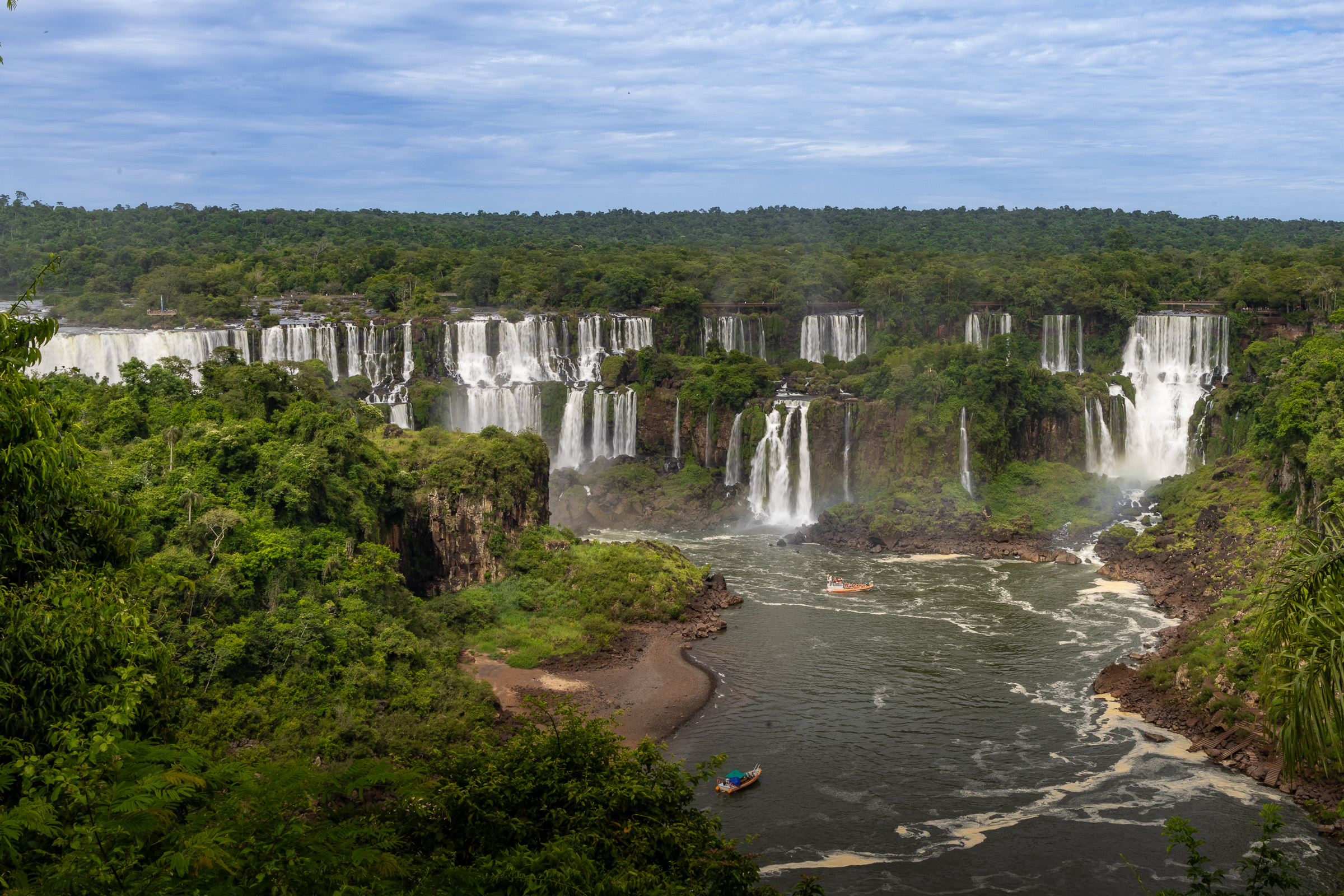
The Devil’s Throat is a signature feature. The river narrows, drops, and disappears into a mist-filled void. You hear it before you see it.

Coatis worked the walkways with confidence. They watched tourists like opportunists. We kept our distance and secured food. The rainforest still felt wild.

What Stayed With Us
This trip gave us beauty, challenge, and perspective. We met friendly people on every trail. We learned new rhythms and new landscapes. We left grateful for what we saw and what we were able to do.
Patagonia's Mount Fitz Roy was no longer just a symbol on a logo. It was a beautiful sanctuary, well worth the challenging early morning hike. That is the best kind of travel.
Bring Patagonia Fine Art Prints into Your HomePlan Your Visit
For official guidance and updates, start with the park resources below.
- Los Glaciares National Park (Argentina) — Official site (external site, opens in new tab)